
Ninety-three percent of communication is nonverbal, and political campaigns have known this for decades. What appears behind a candidate during a press conference, fundraiser, or rally speech is never accidental. Every color, logo placement, and repeated graphic is a deliberate choice, and modern campaigns spend serious resources getting it right. Visual staging has become as strategic as policy messaging, and the backdrop is often the first thing a television camera captures.
This shift toward media sophistication has made branded display solutions a standard fixture in political and civic events. Organizations running high-visibility engagements across the country regularly turn to step and repeat banner NYC providers to create consistent, professional backdrops that ensure their logo or messaging appears prominently in every photograph and media clip produced at the event. The practice has moved well beyond corporate product launches. It is now embedded in how elected officials, nonprofit leaders, and advocacy groups present themselves publicly.
The Case for Branded Staging in Political Events
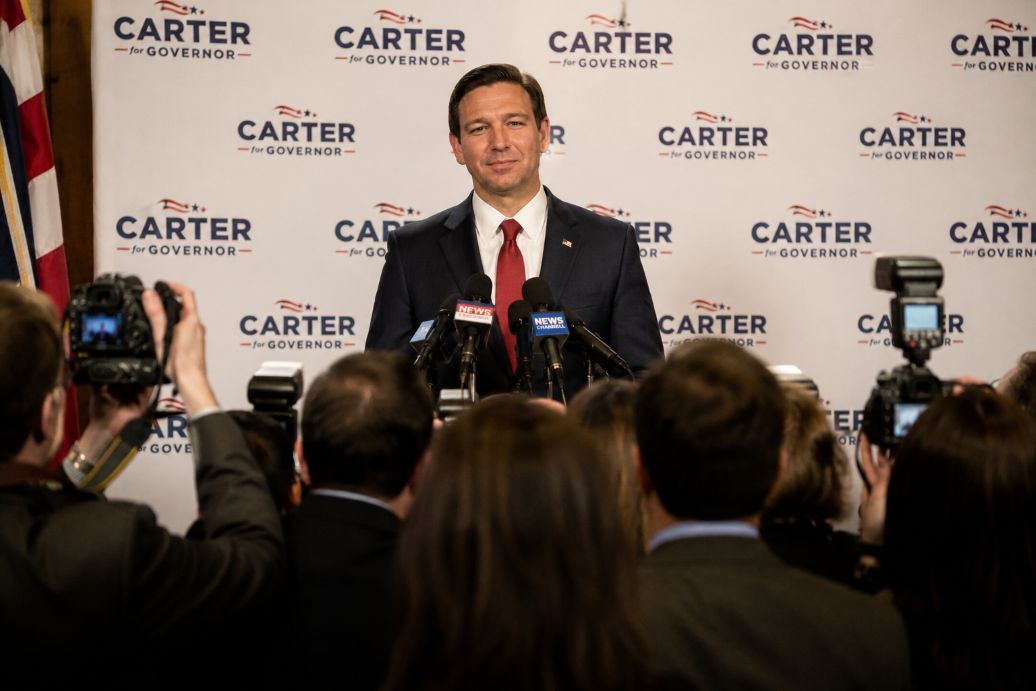
Supporters of branded backdrops point to a straightforward logic: repetition builds recognition. When a candidate stands before a display that repeats their campaign logo dozens of times, every cropped photo and video still carries that branding regardless of how the image is framed. This is not a new idea. The George W. Bush presidential campaign was widely credited with pioneering the modern political backdrop strategy, creating environments where every camera angle reinforced a single unified message. Communications teams later adopted this approach wholesale across party lines.
Research in visual cognition supports the approach. Studies from the Nielsen Norman Group and related behavioral researchers show that repeated visual exposure to a logo or symbol increases familiarity and perceived trustworthiness over time, a phenomenon sometimes called the mere exposure effect, first documented by psychologist Robert Zajonc. For political figures trying to establish name recognition in a crowded media landscape, this matters. A well-designed backdrop can do quiet, persistent work that no single speech ever could.
Practical considerations also favor branded staging. Press appearances are unpredictable. Reporters shoot from different angles, editors crop images for different formats, and social media users clip video into short fragments. A logo-repeating display ensures that no matter how an image is trimmed or shared, some portion of the intended branding remains visible. The Republican National Committee and the Democratic National Committee both deploy this strategy heavily during convention cycles precisely because broadcast coverage is fragmented across hundreds of media outlets simultaneously.
Concerns About Over-Commercialization and Controlled Image Management
Not everyone views the rise of visual staging as purely beneficial. Critics argue that the heavy use of branded environments contributes to what political media scholars call “stagecraft over substance,” a tendency for modern campaigns to prioritize aesthetic control over genuine public engagement. When every moment of a politician’s public life is packaged for optimal media capture, the line between governance and marketing begins to blur.
Thomas Patterson, a professor at Harvard’s Shorenstein Center on Media, Politics and Public Policy, has written extensively on how campaigns have shifted from policy-centered communication toward image management strategies in the television and digital age. His research suggests that as campaigns become more visually sophisticated, journalists and voters can struggle to find the substance beneath the production. A polished press backdrop may signal organizational competence, but it can also project an air of inaccessibility, a sense that everything, including the physical environment, has been curated to prevent spontaneity.
There is also a cost equity concern worth noting. High-quality event staging requires meaningful financial investment. For well-funded campaigns or established organizations, custom graphic displays are a routine line item. For grassroots candidates, local advocacy groups, or community-based civic organizations, the expense can be prohibitive. This creates a visibility asymmetry: those with more resources can project professionalism and media readiness, while underfunded campaigns may appear comparatively unpolished even when their policy positions are equally substantive.
Some political communication researchers, including scholars at the Annenberg School for Communication, have flagged the risk that voters increasingly equate production quality with candidate credibility, a troubling conflation that rewards fundraising capacity rather than policy depth or leadership character.
How Organizations Standardize Visual Messaging with Repeating Displays
Despite these valid concerns, the use of repeating logo displays at political and civic events continues to grow. Organizations of various sizes and ideological backgrounds have found practical reasons to adopt the format. City council campaigns, labor unions, nonprofit advocacy groups, and state-level party organizations all use graphic backdrop systems during press conferences, endorsement announcements, and public rallies.
The standardization appeal is significant. Having a consistent visual display means that communications staff do not have to renegotiate the visual environment at every event. Whether the backdrop appears at a small donor reception or a major rally, it carries the same brand identity. This consistency matters especially for organizations that hold frequent events across multiple venues, where room configurations and lighting conditions vary widely.
Major party conventions illustrate this at the highest level. During the 2020 Democratic National Convention, conducted largely in a hybrid format due to pandemic restrictions, the visual production team created highly controlled staging environments precisely because they could not rely on crowd energy or physical presence. Every camera-facing surface was treated as a branded visual asset. The same logic applies at smaller scales. An incumbent congressman holding a constituent press briefing or a mayoral candidate announcing a new policy platform benefits from the same principle: controlled visual environments keep the message focused.
READ ALSO: Expertise And Experience For Results Beyond Compare | SEO For Your Political Campaign
How Visual Repetition Shapes Recognition in Political Media
The long-term effect of logo repetition in political media is well-documented. Data from Pew Research Center tracking studies consistently shows that visual brand familiarity is one of the strongest predictors of candidate name recognition among low-information voters, those who consume political news only occasionally. For these audiences, the visual impression left by repeated exposure to a candidate’s logo or campaign colors can be as influential as any policy statement.
This dynamic reinforces why political communication teams invest in professionally produced repeating displays for interviews, announcement events, and fundraising appearances. The backdrop is not decoration. It is a media tool, one that works silently across thousands of shared images, news clips, and social posts generated at every event. From a communications standpoint, branded staging functions as earned media amplification. Every image captured and distributed by a journalist, supporter, or attendee becomes a vehicle for visual messaging that the campaign did not pay to place.
The tension between effective communication and manufactured image management will not resolve itself. What is clear is that visual repetition has become a durable feature of how political figures seek public recognition. Whether that represents strategic sophistication or a troubling aestheticization of civic life depends, in part, on what sits behind the backdrop. The real question is whether the substance matches the staging.